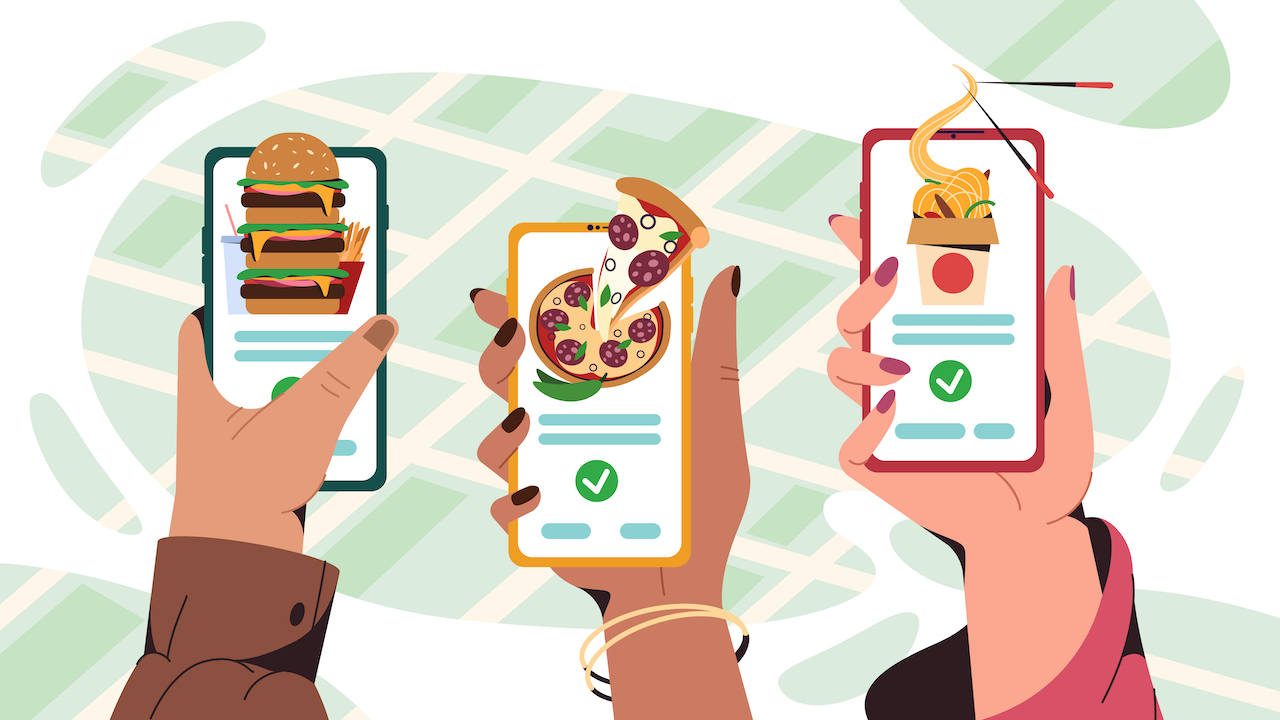
The food delivery industry has evolved far beyond simple online ordering. What started as basic web-based menus has now become a highly intelligent, data-driven ecosystem powered by artificial intelligence, automation, and real-time logistics. As consumer expectations continue to rise, technology is reshaping how restaurants, aggregators, cloud kitchens, and startups operate.
- 1. Artificial Intelligence & Machine Learning
- 2. Real-Time GPS & Smart Route Optimization
- 3. Cloud Computing & Scalable Infrastructure
- 4. Blockchain for Secure Transactions
- 5. Voice Search & Conversational AI
- 6. Internet of Things (IoT) in Smart Kitchens
- 7. Drone & Autonomous Vehicle Delivery
- 8. Augmented Reality (AR) for Interactive Menus
- 9. Big Data Analytics for Business Intelligence
- 10. Sustainable & Eco-Friendly Technology
- The Future of Food Delivery Technology
- Final Thoughts
For any business involved in food delivery app development, understanding emerging technologies is no longer optional—it’s a competitive necessity. Let’s explore the top innovations transforming modern food delivery platforms in 2026 and beyond.
1. Artificial Intelligence & Machine Learning
Artificial Intelligence (AI) is at the heart of next-generation delivery apps. AI-driven systems analyze customer behavior, preferences, order history, location data, and even weather patterns to provide hyper-personalized recommendations.
Apps like Uber Eats and DoorDash use machine learning algorithms to:
- Suggest relevant dishes
- Predict reorder behavior
- Optimize delivery routes
- Forecast demand during peak hours
AI also improves restaurant operations by predicting ingredient demand and reducing food waste. Businesses planning to Build a food delivery app today must integrate AI-powered recommendation engines to stay competitive.
2. Real-Time GPS & Smart Route Optimization
Real-time tracking has become a standard feature, but the technology behind it is rapidly advancing. Modern delivery apps now use intelligent route optimization systems that consider:
- Traffic congestion
- Weather conditions
- Road closures
- Driver availability
Smart logistics ensure faster deliveries and lower fuel consumption. For any pickup and delivery app development company, implementing advanced route algorithms is essential to improve operational efficiency and customer satisfaction.
3. Cloud Computing & Scalable Infrastructure
Cloud technology allows food delivery platforms to scale seamlessly during peak hours. Events like festivals, sports matches, or promotional campaigns can cause sudden spikes in traffic.
Cloud services from providers like Amazon Web Services and Google Cloud enable:
- Auto-scaling servers
- Secure data storage
- High-speed content delivery
- Load balancing
This ensures uninterrupted service even when thousands of users place orders simultaneously. Businesses often consult a food delivery app development company to design a robust cloud-native architecture that supports future growth.
4. Blockchain for Secure Transactions
Security remains a major concern in online payments. Blockchain technology is emerging as a powerful solution for secure, transparent transactions.
Benefits include:
- Tamper-proof transaction records
- Reduced fraud risk
- Transparent commission distribution
- Faster cross-border payments
For platforms managing multiple restaurants and vendors, blockchain can streamline revenue sharing while maintaining trust among stakeholders.
5. Voice Search & Conversational AI
Voice-enabled ordering is becoming increasingly popular. Integrations with smart assistants allow customers to place orders hands-free. This technology enhances accessibility and convenience.
Conversational AI chatbots also:
- Answer FAQs instantly
- Track orders
- Resolve complaints
- Recommend menu items
Voice and chatbot automation reduce operational costs, which directly impacts overall food delivery app development cost planning for startups and enterprises.
6. Internet of Things (IoT) in Smart Kitchens
IoT devices are transforming restaurant kitchens into smart production hubs. Connected sensors monitor:
- Cooking temperatures
- Inventory levels
- Equipment health
- Preparation times
This improves food quality and operational efficiency. Cloud kitchens particularly benefit from IoT integration, as they rely heavily on optimized workflows.
Technology-driven restaurants increasingly partner with Top food delivery app development companies to integrate IoT dashboards directly into admin panels.
7. Drone & Autonomous Vehicle Delivery
Autonomous delivery is no longer futuristic—it’s being tested and deployed globally. Companies like Starship Technologies are leading innovations in robotic and drone deliveries.
Benefits include:
- Faster last-mile delivery
- Reduced labor costs
- Lower carbon emissions
- Contactless fulfillment
While regulatory challenges still exist, autonomous delivery will likely become mainstream in urban areas over the next decade.
8. Augmented Reality (AR) for Interactive Menus
AR technology enhances customer engagement by allowing users to:
- View 3D previews of dishes
- Check portion sizes visually
- Experience immersive menu interactions
This builds trust and reduces order dissatisfaction. Restaurants adopting AR gain a competitive advantage in crowded marketplaces.
9. Big Data Analytics for Business Intelligence
Data is one of the most valuable assets in the food delivery ecosystem. Advanced analytics tools provide insights into:
- Customer behavior patterns
- Peak ordering times
- Popular cuisines
- Marketing campaign performance
With actionable insights, businesses can refine pricing strategies, improve promotions, and optimize delivery zones.
When companies hire food delivery app developers, they increasingly prioritize expertise in analytics integration to leverage data effectively.
10. Sustainable & Eco-Friendly Technology
Sustainability is becoming a priority for modern consumers. Technology helps businesses:
- Optimize delivery routes to reduce emissions
- Promote eco-friendly packaging
- Support carbon offset initiatives
- Minimize food waste
Some platforms are even expanding into social initiatives like food donation app development services, enabling restaurants to donate surplus food efficiently and reduce waste.
Similarly, specialized solutions such as food truck website development services are helping mobile food vendors digitize their operations and reach customers more effectively.
The Future of Food Delivery Technology
The future of food delivery apps lies in intelligent automation, predictive systems, and seamless digital experiences. Emerging technologies are not only improving user convenience but also transforming backend operations.
From AI-driven personalization to drone deliveries, innovation is accelerating rapidly. Businesses that adopt these technologies early will lead the market, while those that delay risk falling behind.
Whether you are a startup or an enterprise brand, investing in advanced systems and strategic partnerships ensures long-term success in a competitive landscape.
Final Thoughts
The food delivery ecosystem is undergoing a technological revolution. AI, IoT, blockchain, AR, cloud computing, and autonomous logistics are redefining customer experiences and operational efficiency.
As consumer expectations continue to grow, technology will remain the driving force behind innovation. Businesses that embrace emerging trends today will shape the future of digital dining tomorrow.
If you’re planning to enter this space, the key is to align your vision with scalable, secure, and intelligent solutions built for tomorrow’s demands.

At Techratan, we bring you the latest updates from the world of technology and startups—covering breaking news, trends, funding updates, and industry insights. Our mission is to empower readers with accurate, timely, and engaging content that helps them stay ahead in the ever-changing tech landscape. Whether you’re an entrepreneur, investor, or tech enthusiast, Techrata is your trusted source for innovation-driven news.

Leave a Reply