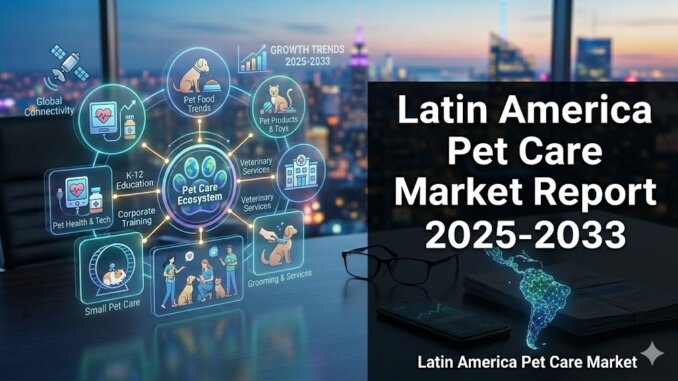
The bond between humans and their animal companions has undergone a radical transformation in Latin America. Once primarily viewed as functional assets – guards for the home or hunters for the field – pets have now ascended to “family member” status. This cultural shift, often referred to as the humanization of pets, is the primary engine driving a market that was valued at USD 11.38 Billion in 2024 and is projected to soar to USD 18.88 Billion by 2033.
With a steady CAGR of 5.79%, the Latin America Pet Care Market is becoming one of the most vibrant regions for global investors and local entrepreneurs alike. This blog explores the segments, trends, and regional nuances defining this “pawsitive” economic boom.
Market Overview: Why Latin America?
Several factors are converging to create a “perfect storm” for the pet industry in this region:
- Urbanization & Smaller Households: As more people move to cities and opt for smaller living spaces, the desire for companionship has led to a surge in pet ownership, particularly cats and small dog breeds.
- Rising Disposable Income: A growing middle class in countries like Brazil and Mexico means more “pet parents” have the financial flexibility to move beyond basic scraps to premium, specialized nutrition.
- Digital Integration: The explosion of e-commerce and subscription services has made high-quality pet care accessible even in remote areas.
Segment Analysis: Breaking Down the Industry
The market is diversified across various product types, pet species, and sales channels. To understand where the money is moving, we must look at the individual segments.
- Product Type: Nutrition and Hygiene
The pet food segment is the undisputed heavyweight of the industry. Pet owners are no longer satisfied with generic kibble; there is a massive shift toward dry food for its convenience and wet food for its hydration benefits and palatability for aging pets.
Beyond food, grooming products are seeing a spike. As pets move from the backyard to the living room sofa, the demand for shampoos, conditioners, and dental wipes has skyrocketed. Innovative products, such as biodegradable grooming wipes launched by brands like HugWith, are simplifying hygiene for busy urban owners.
- Pet Type: The Reign of the Dog
While cats are gaining ground due to their low-maintenance nature in apartments, dogs remain the dominant segment in Latin America. The emotional attachment to dogs drives significant spending on specialized healthcare, vaccines, and even wearable technology. For example, AI-powered smart collars like PetPace Health 2.0 are now being used to monitor vitals and track GPS locations.
- Distribution Channels: The Omni-channel Approach
While offline channels (supermarkets and local vet clinics) still hold the majority share because owners value physical inspections and professional advice, online channels are the fastest-growing. The convenience of home delivery for heavy bags of dog food is an advantage that e-commerce giants and specialized pet platforms are capitalizing on.
Sample Request For Your Business Report
Market Segmentation Summary Table
| Category | Top Segments | Key Drivers |
| Product Type | Pet Food (Dry/Wet), Grooming, Healthcare | Premiumization, natural ingredients, and specialized diets. |
| Pet Type | Dogs (Dominant), Cats, Fish, Others | Humanization of pets and rising adoption rates. |
| Distribution | Offline (Retail/Vet), Online (E-commerce) | Convenience, subscription models, and expert consultations. |
| Leading Countries | Brazil, Mexico, Argentina | High pet population and established retail infrastructure. |
Regional Spotlights
The Latin American market is not a monolith; each country offers unique opportunities:
- Brazil: The powerhouse of the region. Brazil has one of the highest pet populations in the world. Its market is characterized by a high demand for premium nutrition and a very mature grooming sector. Companies like Adimax are expanding production to keep up with this demand.
- Mexico: Following closely, Mexico is seeing a massive investment in manufacturing. Nestlé Purina recently announced a CHF 200 million expansion of its Silao plant, aimed at making it the largest pet food facility in Latin America.
- Peru: Interestingly, Peru is focusing heavily on safety and regulation. Recent updates require strict health certifications and microchipping for pets entering the country, reflecting a nationwide push toward responsible pet ownership.
Future Trends: Sustainability and Tech
Two major trends will define the next decade of pet care in Latin America:
- Sustainability: Consumers are increasingly looking for eco-friendly packaging and ethically sourced ingredients. The Next Generation Pet Food Program, a collaboration involving Mars Petcare, is a prime example of the industry’s shift toward sustainable, plant-based, or insect-based protein alternatives.
- Pet Tech: From automated feeders to AI-driven health monitors, technology is helping owners stay connected with their pets. This “smart pet” trend is particularly popular among tech-savvy Millennials and Gen Z owners who treat their pets as their “first children.”
Conclusion:
The Latin America pet care market is no longer just a niche sector; it is a multi-billion dollar industry fueled by love, health consciousness, and technological innovation. As the bond between humans and pets continues to strengthen, the opportunities for premium, sustainable, and high-tech pet solutions will only continue to grow.

At Techratan, we bring you the latest updates from the world of technology and startups—covering breaking news, trends, funding updates, and industry insights. Our mission is to empower readers with accurate, timely, and engaging content that helps them stay ahead in the ever-changing tech landscape. Whether you’re an entrepreneur, investor, or tech enthusiast, Techrata is your trusted source for innovation-driven news.

Leave a Reply