Denim Tears Clothing: Culture, Identity, and the Fabric of Modern Streetwear
Introduction to Denim Tears Clothing
Denim Tears Clothing isn’t just another streetwear brand fighting for attention in an overcrowded fashion space. It’s a conversation starter, a cultural archive, and, in many ways, a mirror reflecting uncomfortable truths about history, identity, and capitalism. In a world where fashion often chases trends at lightning speed, Denim Tears moves deliberately—almost slowly—forcing you to stop, look, and think. And that’s exactly the point.
Streetwear has always been about more than clothes. From the skate parks of California to the hip-hop scenes of New York, it has served as a visual language for rebellion, self-expression, and community. Denim Tears takes that language and injects it with historical depth. Each piece feels like a paragraph from a history book that was never properly written, let alone taught. When you see someone wearing Denim Tears, you’re not just looking at an outfit—you’re witnessing a statement.
What makes Denim Tears especially powerful is its refusal to dilute its message for mass appeal. The brand doesn’t scream for attention with loud logos or flashy graphics. Instead, it whispers heavy truths through symbolism, fabric choice, and intentional design. It challenges the wearer to understand what they’re putting on their body and why. In that sense, Denim Tears Clothing isn’t passive fashion—it’s participatory. You don’t just wear it; you carry it.
The Origins of Denim Tears
Who Founded Denim Tears?
Denim Tears was founded by Tremaine Emory, a creative force whose fingerprints are all over modern culture. Before launching his own label, Emory worked closely with icons like Kanye West, Virgil Abloh, and Frank Ocean. But despite being surrounded by fame and luxury, his creative compass always pointed toward something deeper—something more personal.
Emory isn’t just a designer; he’s a cultural historian in disguise. Growing up as a Black man in America shaped his worldview, and Denim Tears became his way of unpacking that experience. Instead of separating fashion from politics or history, Emory fused them together. For him, clothes are not neutral objects—they’re loaded with meaning, whether we acknowledge it or not.
What’s interesting about Emory is that he never positioned Denim Tears as a “brand for everyone.” He created it as an honest expression first, and if people connected with it, that was a bonus. That authenticity is rare in an industry driven by sales metrics and viral moments. It’s also why Denim Tears resonates so deeply with those who understand its roots.
The Meaning Behind the Name “Denim Tears”
The name Denim Tears is poetic, painful, and intentional. Denim, one of the most iconic fabrics in the world, is deeply tied to labor—particularly the labor of enslaved Africans and exploited workers. Tears represent grief, loss, and remembrance. Put together, the name becomes a metaphor for the emotional and historical weight carried by something as ordinary as a pair of jeans.
Denim is often marketed as rugged, timeless, and universal. But Denim Tears asks an uncomfortable question: universal for whom? By pairing denim with tears, Emory disrupts the romanticized narrative of American workwear and forces us to confront the cost at which it was built. The name alone sets the tone for everything the brand stands for—fashion that remembers rather than forgets.
The Philosophy Behind Denim Tears Clothing
Fashion as a Cultural Archive
Denim Tears operates like a living museum. Instead of glass cases and plaques, it uses hoodies, jeans, and jackets to preserve stories that history books often ignore. Each collection feels like a chapter focused on a specific theme—slavery, migration, Black joy, or resistance. The clothes become artifacts, carrying memory through movement.
What makes this approach so powerful is its accessibility. You don’t need a degree in history to engage with Denim Tears. You just need curiosity. The brand invites questions. Why cotton? Why these symbols? Why now? In answering those questions, wearers often find themselves learning, reflecting, and rethinking long-held assumptions.
This philosophy turns consumption into contemplation. Instead of buying something because it looks good, you’re encouraged to understand it. That shift alone sets Denim Tears apart in a culture obsessed with instant gratification.
Political Expression Through Streetwear
Denim Tears doesn’t pretend to be neutral. It openly engages with political and social realities, especially those affecting Black communities. But it does so without preaching. There are no long manifestos printed on tags—just carefully chosen visuals that speak volumes.
Streetwear has always been political, even when it didn’t say so explicitly. Denim Tears simply makes that politics visible. It reminds us that what we wear is shaped by systems—economic, racial, and historical. By highlighting those systems, the brand empowers wearers to think critically about fashion’s role in society.
Denim Tears and Black History
The Cotton Wreath Motif Explained
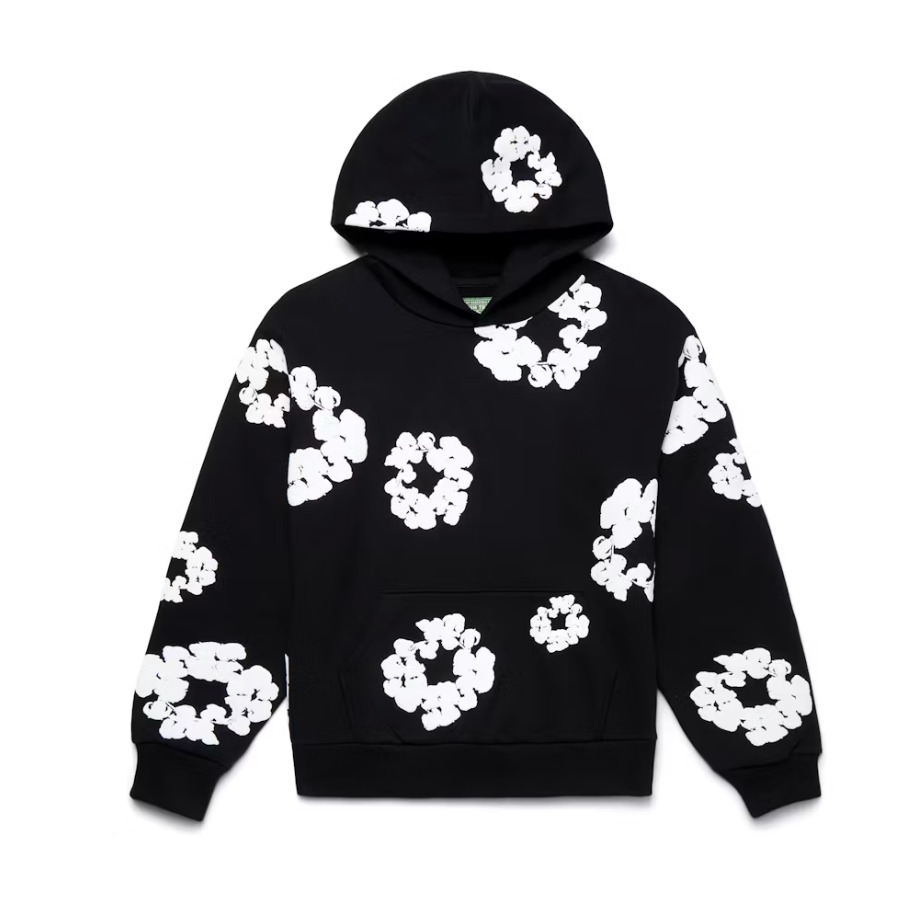
One of the most recognizable symbols in Denim Tears Clothing is the cotton wreath. At first glance, it’s simple. Look closer, and it becomes haunting. Denim Tears Hoodie Cotton is one of the most loaded symbols in American history, tied directly to slavery and exploitation. By placing it front and center, Denim Tears refuses to let that history fade into abstraction.
The wreath shape adds another layer of meaning. Traditionally associated with honor or remembrance, it transforms cotton from a symbol of suffering into one of acknowledgment. It doesn’t erase pain—it frames it. This is reclamation without romanticization, and that balance is incredibly hard to achieve.
Slavery, Labor, and Denim
Denim itself has roots in laborwear, worn by workers who built infrastructure, farms, and industries. Many of those workers were enslaved or severely exploited. Denim Tears brings that context back into the conversation, challenging the idea that fashion exists separately from labor. By wearing Denim Tears, you’re reminded that every garment has a story, and some of those stories are uncomfortable. But discomfort is often where growth begins.
Design Language of Denim Tears
Minimalism With Heavy Meaning
Denim Tears designs are often minimal, but don’t mistake that for simplicity. The silhouettes are clean, almost understated, allowing the symbolism to take center stage. This restraint is intentional. Loud designs can distract; quiet ones invite reflection.
The brand understands that meaning doesn’t need excess. A single symbol, placed thoughtfully, can carry more weight than an entire graphic collage. This design philosophy gives Denim Tears a timeless quality—it doesn’t feel tied to a specific trend or season.
Graphics, Text, and Symbolism
When Denim Tears uses text or graphics, they’re deliberate and sparse. Nothing feels accidental. Words are chosen carefully, often referencing historical moments or cultural ideas. Graphics aren’t there to decorate; they’re there to communicate. This approach makes every piece feel intentional, almost sacred. You get the sense that nothing was added just because it “looked cool.” Everything earns its place.
Materials and Craftsmanship
Quality Over Quantity
Denim Tears doesn’t flood the market with endless drops. Production is limited, and that scarcity is part of the brand’s philosophy. It’s not about hype—it’s about respect. Respect for the story, the materials, and the people wearing the clothes. The fabrics used are durable and thoughtfully chosen. Denim feels substantial, hoodies are heavy, and stitching is precise. These aren’t throwaway pieces; they’re meant to last, both physically and culturally.
Sustainability and Ethical Considerations
While Denim Tears isn’t marketed as a sustainability-first brand, its practices align closely with slow fashion ideals. Limited runs mean less waste. Thoughtful production means fewer disposable garments. In an industry notorious for overproduction, that restraint matters.
Popular Denim Tears Clothing Pieces
Denim Tears Jeans
Denim Tears jeans are the heart of the brand. They often feature the iconic cotton wreath pattern, instantly recognizable yet deeply symbolic. The fits are classic—neither overly slim nor excessively baggy—making them versatile and timeless. What makes these jeans special isn’t just how they look, but how they feel to wear. There’s a weight to them, both literally and metaphorically. You’re not just putting on denim; you’re wearing a story.
Hoodies, T-Shirts, and Outerwear
Beyond jeans, Denim Tears offers hoodies, tees, and jackets that function as everyday staples. These pieces are intentionally wearable, blending into daily life while still carrying meaning. It’s subtle activism—present, but not performative.
Denim Tears Collaborations
Levi’s x Denim Tears
The Levi’s collaboration was monumental. Levi’s, a brand synonymous with denim, partnering with Denim Tears created a powerful full-circle moment. It was history confronting itself. The collaboration recontextualized Levi’s legacy, forcing conversations about who built the brand and at what cost. It wasn’t just a fashion moment—it was a cultural reckoning.
Nike, Dior, and Other Partnerships
Denim Tears has also collaborated with Nike and even Dior, bridging streetwear and luxury. These partnerships expanded the brand’s reach without diluting its message. That’s a rare achievement.
Conclusion
Denim Tears Clothing is more than fashion—it’s memory woven into fabric. It challenges, educates, and resonates on a level few brands dare to reach. In a world obsessed with trends, Denim Tears chooses truth. And that choice is what makes it timeless. Shop Now
FAQs
1. Is Denim Tears a luxury brand?
Denim Tears exists between streetwear and luxury, defined more by cultural value than price point.
2. Why is Denim Tears controversial?
Because it confronts uncomfortable histories that many prefer to ignore.
3. Where is Denim Tears made?
Production varies by collection, often involving trusted manufacturing partners.
4. How often does Denim Tears release new collections?
Releases are limited and intentional, not seasonal or frequent.
5. Is Denim Tears worth the price?
For those who value meaning, craftsmanship, and cultural storytelling, yes.

At Techratan, we bring you the latest updates from the world of technology and startups—covering breaking news, trends, funding updates, and industry insights. Our mission is to empower readers with accurate, timely, and engaging content that helps them stay ahead in the ever-changing tech landscape. Whether you’re an entrepreneur, investor, or tech enthusiast, Techrata is your trusted source for innovation-driven news.